Identify high-risk water and wastewater pipes, understand the impact of failure, and make confident decisions about replacement, rehabilitation, and monitoring across your system.
No two utility systems fail the same way. Pipe age, material, pressure, soil conditions, weather, break history, and many other variables can all influence failure risk depending on local system conditions.
Pipe Risk Management improves water main break prediction, and reduces failure rates, by analyzing the factors unique to each system, helping identify the mains most likely to need attention before failures occur.
BUSINESS RISK PREDICTION
Make every renewal decision count
Get ahead of meter issues before they create billing corrections, bill shock, and customer disputes. Support fair billing and protect customer trust with earlier visibility. When you know which meters need attention sooner, you can address issues earlier and reduce avoidable customer friction.
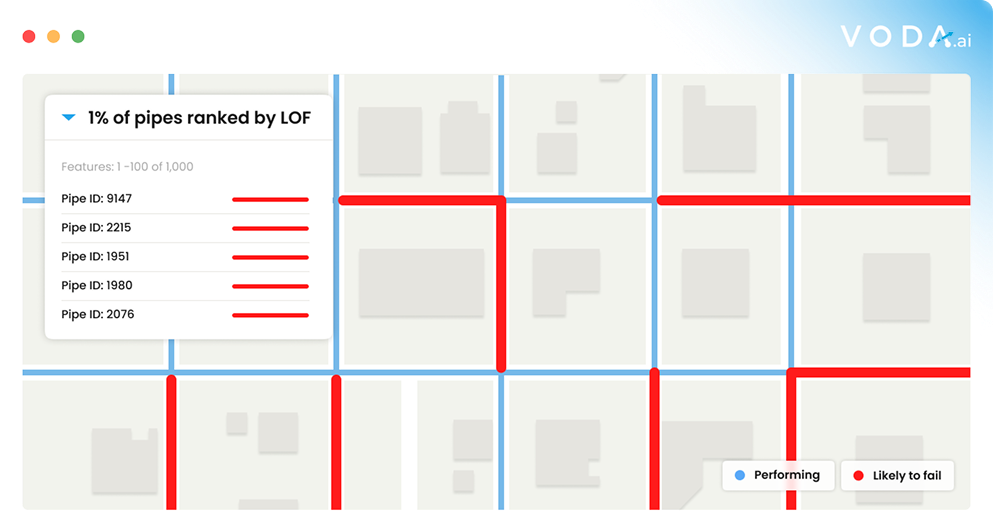
See pipe-level LOF rankings that show which assets are most likely to fail and where, so you can focus inspections, monitoring, and renewal review on the highest-risk areas first.
Consequence of Failure
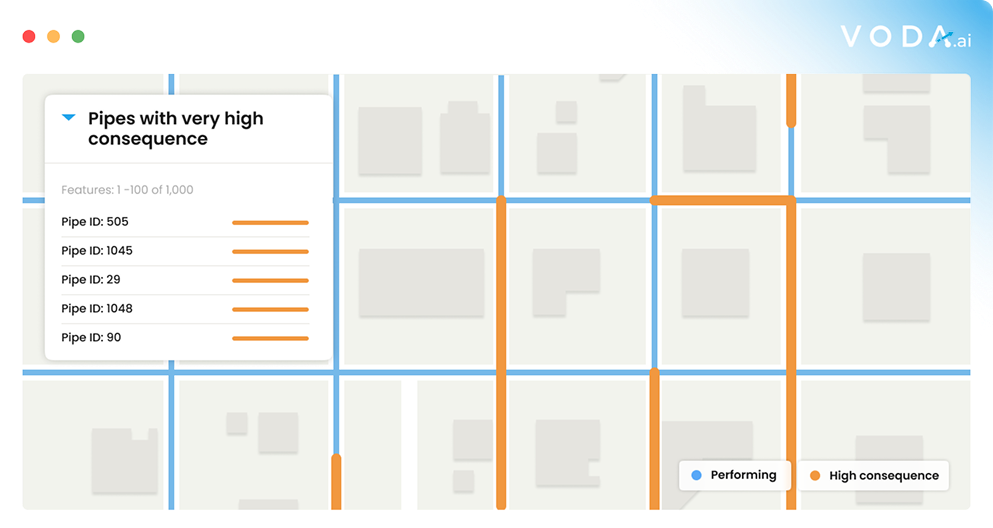
Understand the impact of a pipe failure based on critical locations, service disruption, repair complexity, nearby infrastructure, and community impact.
Business Risk Exposure
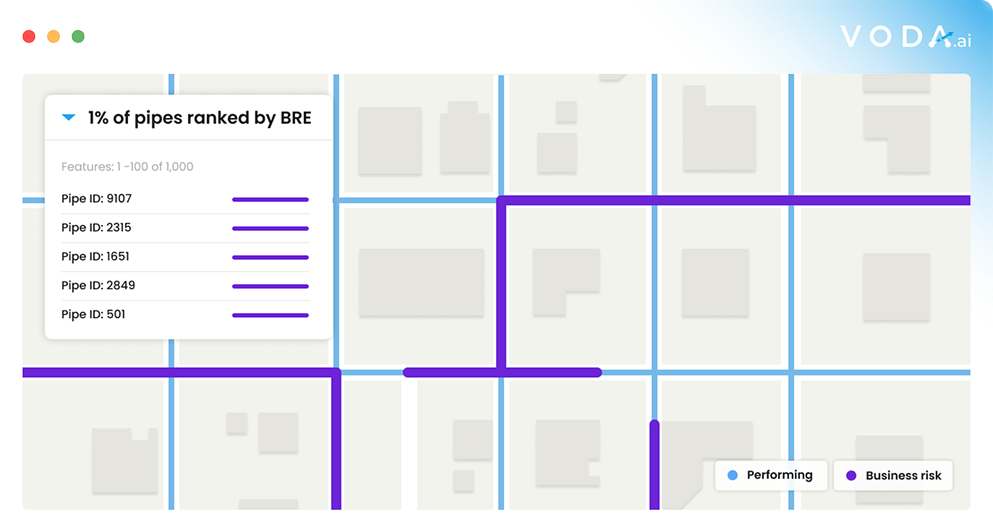
Identify which assets carry the highest overall risk by bringing Likelihood of Failure and Consequence of Failure together, then focus replacement, rehabilitation, inspection, or monitoring where action can reduce the most exposure.
Pipe risk data is only useful when it helps teams make better decisions. Our software supports the planning, engineering, operations, and leadership workflows, utilities rely on to manage water and wastewater pipe renewal.
Capital Planning
Prioritize renewal and rehabilitation projects based on risk
Engineering
Prioritize pipes for condition assessment, rehab, renewal or logger placement based on pipe-level risk.
Operations
Check risk before field work and coordinate with road projects to reduce disruption.
Leadership
Justify and communicate infrastructure needs with clearer evidence and confidence
“There is limited data to make expensive decisions around our pipe network. With VODA.ai’s machine learning technology, we are able to make smart decisions, save valuable resources, and protect our water infrastructure.”
Tim Thomure
City Manager City of Tucson
CASE STUDY
Knowing When to Avoid Pipe Replacements
Tucson Water was replacing pipes based on paving schedules–not actual condition–wasting time and capital.
AI is better for pipe failure prediction because it weighs many risk factors together – asset data, failure history, location, and environmental conditions – to surface the system-specific patterns that age-based or statistical methods miss. In one validation against a utility’s actual failures, machine learning correctly predicted 94% of main breaks (VODA.ai, Greenville Water).
What is water main break prediction?
Water main break prediction is the use of data and machine learning to identify which water mains are most likely to fail. It analyzes asset data, failure history, location, and other risk factors to rank pipes by likelihood of failure, so utilities can act before a break occurs.
What is pipe risk management?
Pipe risk management is the practice of ranking pipes by risk so utilities can prioritize the right response for each one. It combines Likelihood of Failure and Consequence of Failure to help teams decide where to replace, rehabilitate, inspect, or monitor — directing resources where action reduces the most risk.
Isn’t pipe age and failure history enough to prioritize replacement?
No. Age and failure history matter, but they don’t tell the full story. Material, soil conditions, pressure, location, and consequence of failure all shape which pipes to prioritize. Multi-factor risk models weigh these together and rank pipes more accurately than age or history alone.
How does pipe risk management support capital planning?
Pipe risk management supports capital planning by turning asset risk into clear, defensible project priorities. It helps utilities build risk-based replacement and rehabilitation plans, justify budgets with evidence, and align long-term capital investment with the highest-risk areas, so spending targets the pipes that reduce the most risk.Pipe risk management helps utilities translate asset risk into clearer project priorities, supporting risk-based replacement planning, budget justification, and long-term capital planning.
Do utilities need perfect data to get started?
No. Utilities can start with the data they already have – GIS records, pipe attributes, failure history, and other existing system data – and improve planning confidence over time. Complete or perfect data is not required to produce useful pipe-level risk rankings.
Does Pipe Risk Management support wastewater utilities?
Yes. Pipe Risk Management works for both water and wastewater utilities. It evaluates each pipe’s likelihood and consequence of failure, then helps teams prioritize replacement, rehabilitation, inspection, or monitoring – directing limited resources to the assets where action reduces the most risk across the network.
Know which mains need attention first
Identify high-risk water and wastewater assets, prioritize renewal decisions, and reduce the impact of unexpected pipe failures.