From Guesswork to Predictive Strategy
Plano’s water infrastructure spans over 1,500 miles, with 110 miles of large-diameter mains. These are costly to assess, and without prioritization, the city risked spending up to $1 million per year just on inspections.
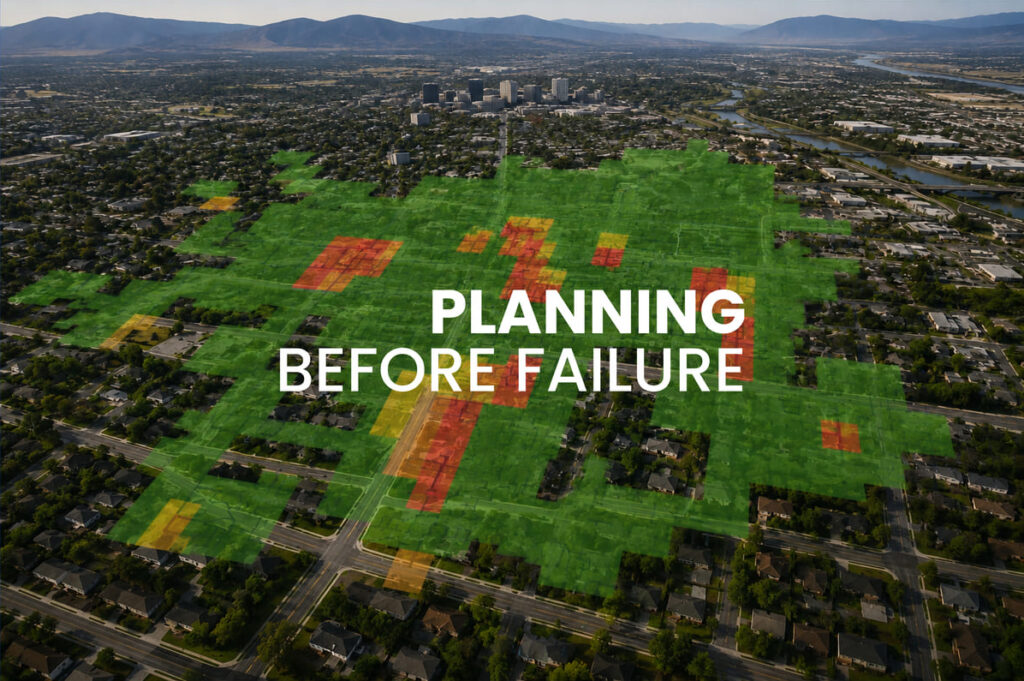
To avoid that, Plano began using VODA.ai’s risk modeling to predict which pipes are most likely to fail – and which can safely wait. As Public Works CIP Manager Drew Zaeske puts it:
“We’re not using VODA.ai to justify more work, we’re using it to avoid unnecessary assessments.”
Smarter Timing, Smarter Spending
Condition assessments are only part of the equation. Plano is aligning pipe replacements with its pavement planning cycles, ensuring streets aren’t repaved only to be torn up again for water work later. This layered strategy prevents rework and extends the value of every dollar spent.
See other case studies from utilities using AI in the field →
Visualizing Future Risk
The team also uses Remaining Useful Life (RUL) modeling to forecast when pipes are likely to expire. These visualizations help explain long-term risk to both planners and non-technical stakeholders. Drew explains:
“That graph alone helps during conversations with people unfamiliar with asset management.”
The Bigger Picture: A Full Capital Planning Strategy
Plano isn’t stopping at pipe-level decisions. The city is integrating VODA.ai insights into a broader Capital Improvement Plan – one that balances pavement overlays, large-diameter inspections, and residential replacements. The goal: a fully aligned capital roadmap by next year.
“This isn’t about flash,” Drew says. “It’s about sustainable planning.”
📄 Want to see the full use case?
Download the full PDF article here
This article is part of our Utility Voices series – where we share real stories, field-tested insights, and the thinking behind smarter infrastructure planning. From early questions to proven outcomes, these are the voices shaping the future of water.
🔔 Subscribe to our blog to hear what’s working, and what’s next.